


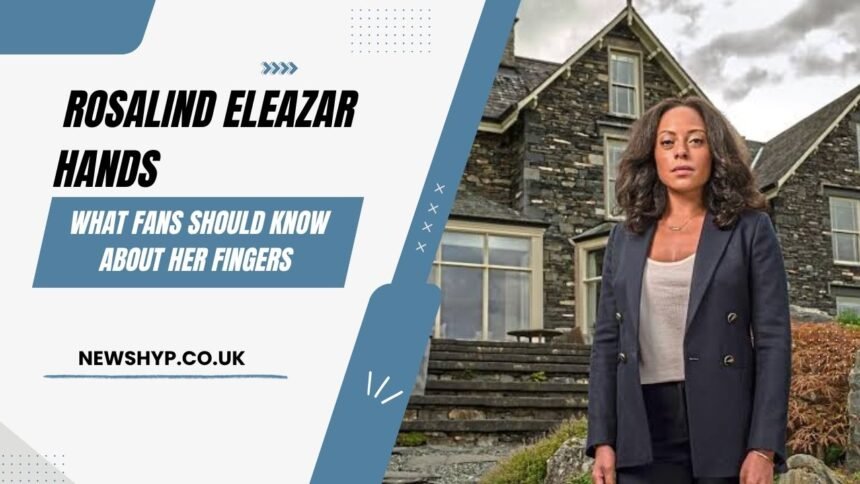
Rosalind Eleazar has built a reputation for powerful performances across British television, film, and theatre. Recently, however, many viewers have searched for information about Rosalind Eleazar hands after noticing that her fingers look different from those of most people. The attention increased after her leading role in Netflix’s Missing You. While online sources widely identify her hand difference as symbrachydactyly, Eleazar herself has not publicly discussed the condition in detail.
Profile biography
| Quick Bio | Details |
|---|---|
| Full Name | Rosalind Eleazar |
| Profession | Actress |
| Nationality | British |
| Known For | Slow Horses, Missing You, Howards End |
| Education | London Academy of Music and Dramatic Art (LAMDA) |
| University | University of Nottingham |
| Notable Role | Detective Kat Donovan in Missing You |
| Other Major Role | Louisa Guy in Slow Horses |
| Career | Theatre, television, and film |
| Hand Difference | Widely reported as symbrachydactyly; Eleazar has not publicly discussed her medical history in detail |
| Years Active | 2010s–present |
Why Rosalind Eleazar’s Hands Have Attracted Attention
Eleazar has appeared in several high-profile productions, including Slow Horses and Missing You. Her role as Detective Kat Donovan in Missing You placed her in front of a large international audience. Close-up shots naturally made her hands more visible, prompting viewers to ask questions about the unusual appearance of her fingers.
The interest is not new. Audiences have also seen her hands during her years on television and stage. Yet the growth of streaming platforms has made small visual details easier for viewers to notice and discuss online. Search interest has therefore focused on whether her hands were injured, altered for a role, or naturally different. Available biographical sources indicate that the difference is congenital rather than the result of an on-screen injury.
What Is Known About Rosalind Eleazar’s Fingers?
Multiple entertainment publications identify symbrachydactyly as the explanation for Rosalind Eleazar’s distinctive fingers. However, an important distinction matters here: Eleazar has not publicly provided a detailed personal medical account confirming the diagnosis. For that reason, responsible reporting should avoid presenting unverified personal medical information as if it came directly from the actress.
Symbrachydactyly is a rare congenital hand difference. Medical references describe it as a condition in which fingers may be unusually short, stiff, webbed, underdeveloped, or absent. The severity can vary significantly from one person to another. The condition generally appears at birth and can affect the structure of bones, tendons, muscles, and other tissues in the hand.
Understanding Symbrachydactyly
Great Ormond Street Hospital describes symbrachydactyly as a congenital hand anomaly that usually affects one upper limb. Its severity ranges from relatively mild shortening or webbing to much more significant differences involving several fingers. The hospital also explains that the exact cause remains unknown, although interruption of blood supply during early limb development has been proposed as one possible explanation.
Medical research similarly describes symbrachydactyly as a developmental difference rather than an injury acquired later in life. Treatment, when necessary, depends on the individual and can focus on improving hand function or appearance. Options may include reconstructive procedures, occupational support, or other approaches. Not every person with the condition requires surgery.
Rosalind Eleazar Has Never Let Her Hands Define Her Career
What makes Eleazar’s story particularly interesting is that her career has developed without her hand difference becoming the central theme of her public identity. She trained at the London Academy of Music and Dramatic Art and began building experience through theatre before moving into increasingly prominent screen roles.
Her credits include The Personal History of David Copperfield, Howards End, Rellik, Class of ’09, and Slow Horses. She also earned recognition for her stage work, including her performance as Yelena in Uncle Vanya. Her career demonstrates that audiences and casting directors have continued to respond to her acting ability, emotional range, and screen presence.
From Theatre Training to Major Screen Roles
Eleazar’s theatre background has been an important part of her professional development. She trained at LAMDA after studying Chinese and Spanish at the University of Nottingham. Her early stage work helped establish her reputation before television and film brought her to a wider audience.
Her performance in Slow Horses introduced her to viewers who may not have followed her earlier theatre career. She plays Louisa Guy in the Apple TV+ spy drama, appearing alongside an established ensemble cast. Later, Missing You gave her another major opportunity as the central character, Detective Kat Donovan.
Her Hands Are Not a Plot Device
One important point often gets lost in online discussions about Rosalind Eleazar hands: her hand difference is not generally presented as a storyline in the major productions for which she is known. In Slow Horses, for example, Louisa Guy is an experienced MI5 agent. The character’s story focuses on espionage, relationships, loyalty, and the pressures of working at Slough House.
Likewise, Missing You centers on Kat Donovan’s investigation and deeply personal family history. The Netflix thriller does not make Eleazar’s hands a mystery that audiences are expected to solve. Her physical appearance is simply part of the actor audiences see on screen. That distinction matters because representation can become more meaningful when a physical difference does not automatically become the character’s defining feature.
Why Representation Matters Beyond the Curiosity
The public fascination with Rosalind Eleazar’s hands also connects to a broader conversation about representation in entertainment. Actors with visible physical differences have historically had fewer opportunities to appear on screen in ordinary roles where their bodies are not treated as the story.
Eleazar’s career offers a different kind of visibility. Her characters have their own ambitions, conflicts, relationships, and professional lives. Her hand difference does not prevent her from portraying an intelligence officer, a detective, or complex theatrical characters. That can help audiences see physical difference as one part of a person rather than the complete definition of that person.
The Focus Should Remain on Her Work
There is nothing wrong with viewers noticing something distinctive about an actor. Curiosity is natural, particularly when a feature is visible in close-up shots. The problem begins when speculation replaces reliable information or when an actor’s appearance overshadows years of professional work.
In Eleazar’s case, her acting record provides plenty to discuss. Her stage performances, television roles, film appearances, and growing international profile tell a much larger story than questions about her fingers. She has developed a career through training, performance, and persistence, while her physical difference remains only one small part of her identity.
What Fans Can Take From Rosalind Eleazar’s Story
The strongest takeaway from the discussion around Rosalind Eleazar hands is that viewers should separate confirmed information from online assumptions. Reliable medical sources explain what symbrachydactyly is, but Eleazar has not publicly offered a detailed account of her own condition. That makes it important not to speculate about her personal medical history beyond what she has chosen to share.
At the same time, her career shows how much representation has changed. Audiences increasingly see actors with different physical characteristics taking on substantial roles without their appearance becoming the entire narrative. Eleazar’s success is ultimately about much more than her hands.
Conclusion
Rosalind Eleazar’s distinctive hands have attracted new attention as her television profile has grown, particularly following Missing You. Online sources commonly associate her hand difference with symbrachydactyly, a rare congenital condition affecting hand development, although Eleazar has not publicly discussed her medical history in detail.
What should remain clear is that her hands do not define her career. From theatre productions to Slow Horses and Missing You, Eleazar has established herself through the strength of her performances. Her story also highlights the value of seeing physical differences represented naturally on screen, without turning them into the sole focus of an actor’s identity.
FAQs
What happened to Rosalind Eleazar’s hands?
Available entertainment reports describe Rosalind Eleazar as having a congenital hand difference commonly identified as symbrachydactyly. However, she has not publicly discussed her medical condition in detail, so claims about her personal diagnosis should be treated carefully.
Does Rosalind Eleazar have symbrachydactyly?
Several publications identify her hand difference as symbrachydactyly. Medical sources describe the condition as a congenital hand difference involving shortened, webbed, underdeveloped, or missing fingers. Eleazar herself has not publicly provided a detailed confirmation of the diagnosis.
Is Rosalind Eleazar’s hand difference caused by an injury?
Available reports describe the difference as congenital rather than an injury suffered during filming or later in life. Symbrachydactyly is present from birth and results from differences in the development of the hand.
Does Rosalind Eleazar’s hand affect her acting career?
There is no evidence that her hand difference has prevented her from building a successful acting career. She has worked extensively in theatre, film, and television, including prominent roles in Slow Horses and Missing You.
What is Rosalind Eleazar best known for?
Rosalind Eleazar is widely recognized for playing Louisa Guy in Slow Horses and Detective Kat Donovan in Netflix’s Missing You. She has also appeared in The Personal History of David Copperfield, Howards End, and several stage productions.
READ MORE : Justin Timberlake Toxicology: What You Should Know
Share this content: